How We Make Our Pizza Dough

The 48-Hour Process

The pizza dough at Kaio was started roughly 48 hours before it reached your table. This breakdown explains every step – the imported flour, the cold fermentation window, the hand-stretching technique, and our high-heat oven – and why each choice directly dictates the quality of the crust you are eating.

If you order a pizza at Kaio, the dough on your plate begins its journey two days before you sit down. This slow timeline is the single biggest reason our crust tastes the way it does. It is also why the consulting Italian chefs who spent three months in Paje training our Swahili kitchen team spent more time perfecting the dough than on almost anything else in the restaurant.

We map out this process below not to overcomplicate things, but because our guests constantly ask how we get our crust so light, and because understanding the logistics makes tasting it that much better.

Four Pure Ingredients

The flour matters more than any other element. “00” is the finest grade of milling available in Italy. It features a specific protein structure that yields an incredibly elastic, soft dough that is notably lighter on the stomach than standard bread flours. Importing this flour directly from Italy costs significantly more than sourcing regional alternatives, but our consulting chefs were uncompromising: local flours simply cannot handle a long fermentation without collapsing, meaning the flour is non-negotiable.

The water is equally critical. It is fully filtered, kept at room temperature, and measured precisely against the flour weight to establish the hydration level. This ratio is carefully calibrated to balance the sea-level humidity of Paje beach with the high heat of our deck.


Our dough relies on a strict four-ingredient matrix: Italian “00” flour, water, sea salt, and a small amount of fresh yeast. The simplicity is deliberate.

The Mix and Autolyse

Mixing happens in the late afternoon. The ingredients enter our mixer in a strict sequence, salt and yeast are separated initially so the salt doesn’t deactivate the yeast, before the machine runs at a low speed for 12 to 15 minutes.

The dough completely transforms during this window. It begins as a rough, shaggy mass before aligning into a smooth, elastic ball with a silky, slightly tacky surface texture. This change signals proper gluten development, creating the structural web needed to lock in air.

After mixing, the dough rests for an hour to undergo autolyse, a resting period where the flour fully hydrates and the gluten network relaxes. Once rested, the dough is hand-portioned into individual, precisely weighted balls and trayed.

The Long Cold Ferment

Once portioned, the dough trays go straight into refrigeration for 24 to 48 hours.

Why Time is Everything

By dropping the temperature, we force the yeast to work at a crawl. Fast fermentation at room temperature produces carbon dioxide quickly, but it completely skips the creation of secondary flavor compounds. Over a multi-day cold sleep, the yeast creates a deeply satisfying, wheaty, and slightly tangy flavor profile that cannot be simulated with additives.

This long fermentation yields three distinct benefits:

01

Complexity

The crust develops a rich, artisanal taste rather than tasting like plain white bread.

02

Easy Digestion

The slow enzymes break down complex starches and gluten bonds ahead of time. Guests who typically find pizza heavy or bloating often note that Kaio’s pizzas leave them feeling energized and light.

03

Perfect Air Distribution

It allows a beautiful, irregular cell structure to form within the dough ball.

As one of our consulting Italian chefs told the kitchen team during training: “Pizza fatta veloce è pizza che ti fa male”, pizza made quickly is pizza that makes you feel uncomfortable. Slower, controlled maturation is what makes a pizza truly enjoyable, a traditional standard structurally outlined in the official Associazione Verace Pizza Napoletana International Regulations. 

Bringing the Dough Back

Two to three hours before the dinner service begins, the dough trays are pulled from the fridge to warm up to room temperature.

Cold dough is far too stiff to shape; the gluten tightens up when chilled and springs back aggressively if you attempt to stretch it. Allowing the dough to come up to ambient beach temperature relaxes the proteins, making the balls pillowy, soft, and completely pliable.

Hand-Stretching
vs. Rolling Pins

Pizza dough at Kaio is always stretched entirely by hand. We have a zero-tolerance policy for rolling pins.

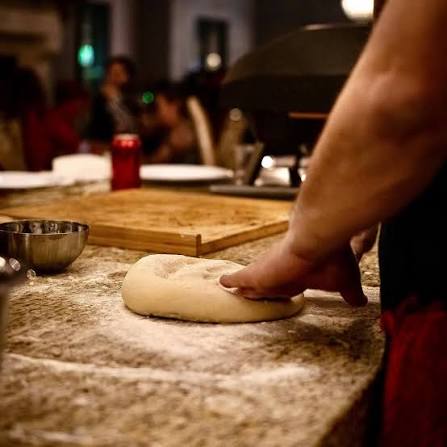
Our chefs use a traditional Neapolitan technique: they press the center of the ball gently with their fingertips to push the internal air outward, deliberately forming a slightly thicker border along the rim. They then lift the dough, rotating it smoothly across the back of their hands to let gravity pull it into a thin, delicate disc. Because this is done by hand, every pizza features a beautifully irregular, organic shape.

Avoiding a rolling pin is an operational necessity. The long cold ferment spent two days building a delicate network of microscopic gas pockets. Running a heavy rolling pin over the dough mechanically crushes those pockets, pushing out the carbon dioxide and resulting in a dense, tough, cracker-like crust. Hand-stretching preserves those air pockets so that they expand instantly when hitting the heat, creating the characteristic puff and dark char-blisters of a true Neapolitan rim.

The Oven

Modern Italian Engineering at 450°C

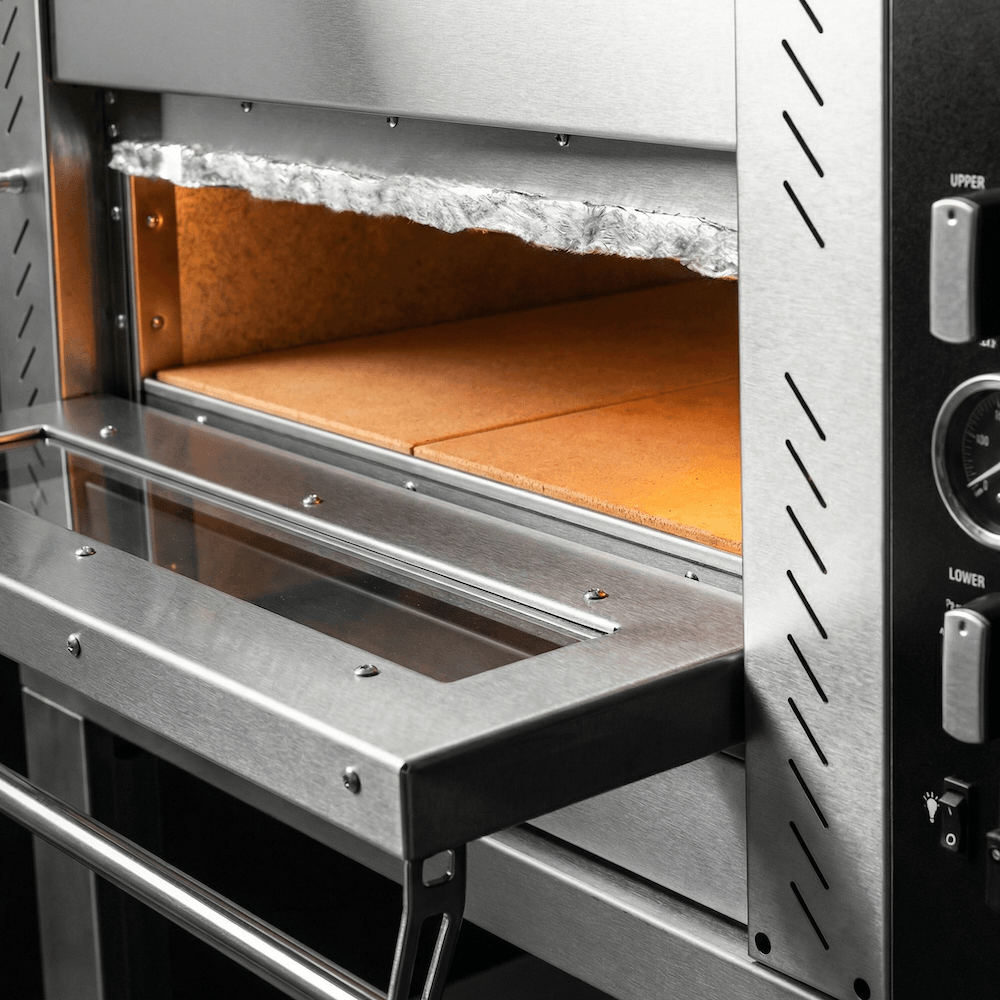
Our pizzas cook in a high-end Italian electric pizza oven engineered specifically for high-volume Neapolitan baking. We address this directly because pizza purists occasionally raise an eyebrow at the lack of an open wood fire.

Traditional Neapolitan standards demand an operational deck temperature between 400°C and 450°C. At this intensity, a pizza cooks completely in just 60 to 90 seconds, flash-melting the cheese and blistering the crust while keeping the center tender and hydrated.

Modern premium electric decks achieve these exact temperatures with mathematical precision. Unlike wood fires – which require constant manual stoking, fluctuate based on the moisture content of the wood logs, and lose massive amounts of heat every time the oven mouth opens – our electric deck maintains a flawless, radiant temperature across every single service hour.

The Associazione Verace Pizza Napoletana (the official governing body for authentic Neapolitan pizza in Italy) now formally certifies electric-oven pizzerias for this exact reason. It offers the absolute highest quality ceiling with total day-to-day consistency.

What This Means for Your Dinner

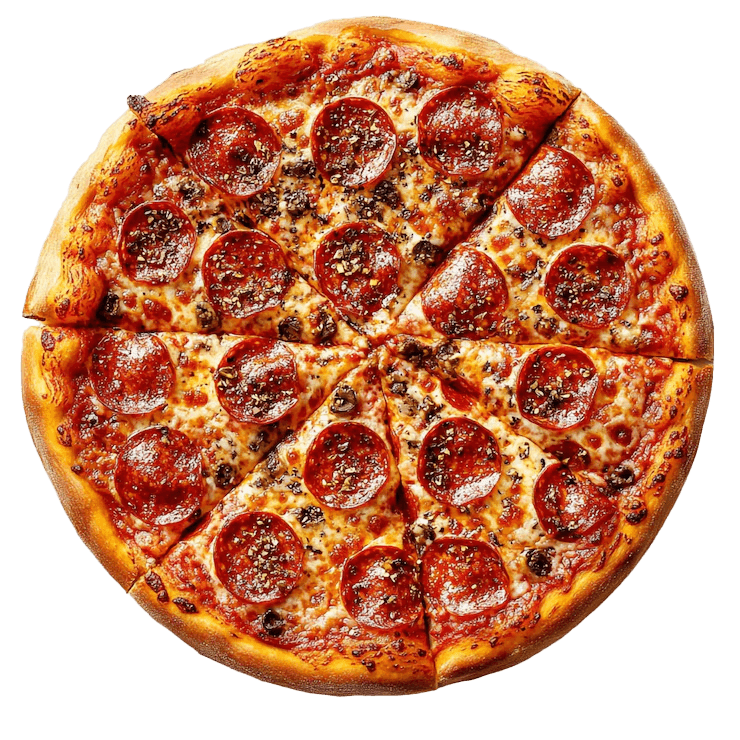
When you sit down at Kaio and cut into a pizza that is deeply flavorful, incredibly light, perfectly charred at the edges, and soft in the center, you are tasting a 48-hour chain of events. From the agricultural fields of Italy to our temperature-regulated proofing trays right here on Paje beach, we don’t cut corners. We are incredibly proud to keep this standard alive every single day.

Quick Takeaways

The Science Behind Our Crust

01

Four Ingredients Only

We use exclusively Italian “00” flour, filtered water, fine sea salt, and a minimal touch of fresh yeast. No added sugars, oils, or chemical conditioners.

02

The 48-Hour Cold Ferment

Resting the dough in a temperature-controlled environment for up to two days allows the yeast to develop complex, slightly tangy flavor compounds while breaking down starches for easier digestion.

03

Strictly Hand-Stretched

We never use mechanical rollers or rolling pins. Hand-rotation preserves the delicate carbon dioxide pockets built up during fermentation, which are essential for classic Neapolitan blistering.

04

450°C Electric Baking

We utilize a state-of-the-art Italian electric pizza oven that matches the extreme high heat of traditional wood-fired setups, formally certified by the Associazione Verace Pizza Napoletana for perfect precision.